.png)

|
Grade |
Code |
UNS |
Nickel Alloys |
|
Inconel 625 |
Alloy 625 (2.4856) |
N06625 |
Inconel 625 / Alloy 625 is a nickel-chromium alloy containing additions of molybdenum and niobium. Its high strength is achieved primarily through solid-solution strengthening rather than precipitation hardening. It offers excellent resistance to pitting and crevice corrosion and performs reliably in a wide range of highly corrosive environments. Inconel 625 / Alloy 625 can be used from cryogenic temperatures up to approximately 980°C; however, the allowable temperature for prolonged high-temperature service should be evaluated according to the specific application. High tensile, creep and rupture strength, together with excellent fatigue and thermal-fatigue resistance, good oxidation resistance and very good weldability, are among the alloy's principal characteristics.
|
Ni % |
Cr % |
Co % |
Mo % |
Mn % |
Si % |
Al % |
Ti % |
Nb +Ta % |
Fe % |
|
58.0 min. |
20.00 – 23.00 |
1.00 max. |
8.00 – 10.00 |
0.50 max. |
0.50 max. |
0.40 max. |
0.40 max. |
3.15 – 4.15 |
5.00 max. |
|
Product Form |
Rp0.2 MPa |
Rm MPa |
Elongation [%] |
Hardness [HB] |
Density [g/cm3] |
|
Forged Bar <160 mm="" p=""> |
≥ 380 |
≥ 760 |
≥ 30 |
- |
8.47 |
|
Forged Bar ≥160 mm |
≥ 330 |
≥ 730 |
≥ 35 |
- |
8.47 |
|
Plate ≤ 50 mm |
≥ 380 |
≥ 760 |
≥ 35 |
- |
8.47 |
|
Sector |
Products |
|
Chemical & Petrochemical |
Reactors, heat exchangers, process piping |
|
Oil & Gas / Offshore |
Production piping, riser cladding, flare-system components |
|
Aerospace |
Exhaust-system components, air ducts, bellows |
|
Marine |
Seawater piping, pump components, valve components |
|
Nuclear |
Reactor internals, control-rod components, waste-processing equipment |
|
Energy & Environmental Technologies |
Expansion joints, heat-recovery equipment, superheater tubes |
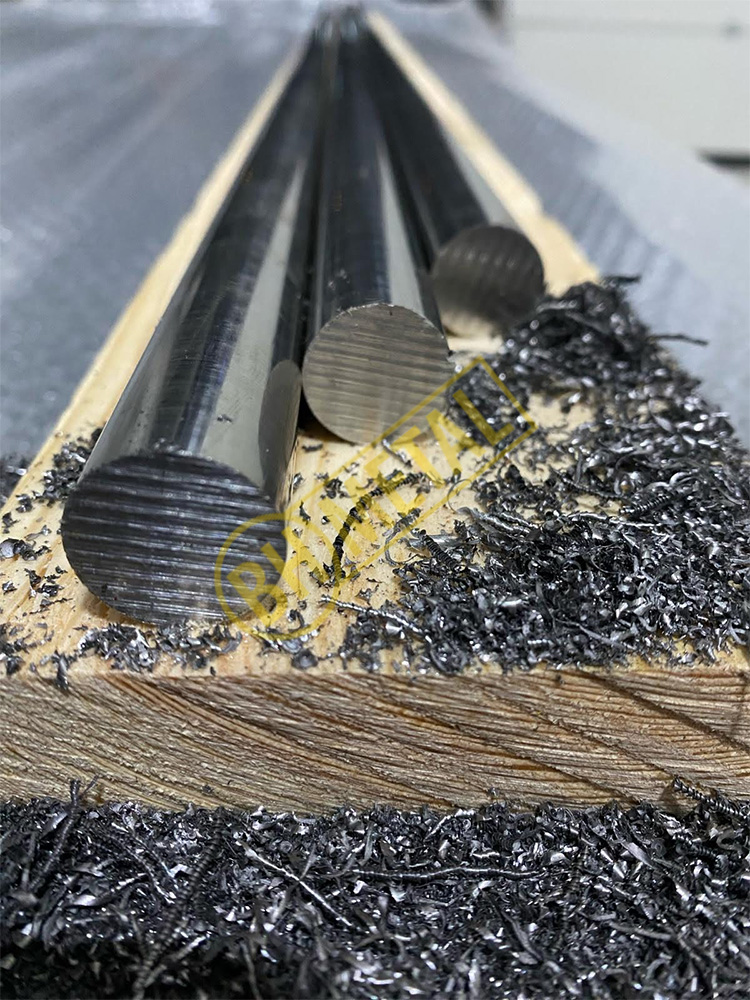
Inconel 625 / Alloy 625 is suitable for both hot and cold forming; however, its high deformation resistance and pronounced work-hardening behavior require robust equipment and carefully controlled processing conditions. Cold forming can significantly increase the alloy's strength and hardness, and intermediate annealing may be required after heavy deformation. During hot forming, temperature and deformation should be carefully controlled to maintain a uniform grain structure. Inconel 625 / Alloy 625 in the soft-annealed Grade 1 condition is primarily intended for wet-corrosion and chemical-process service, whereas the solution-annealed Grade 2 condition is preferred for high-temperature applications above approximately 600°C where greater creep strength is required. Machining is more demanding than for stainless steels and generally requires lower cutting speeds together with appropriate tooling. Post-weld heat treatment is generally not required for the alloy to retain high strength and ductility after welding.
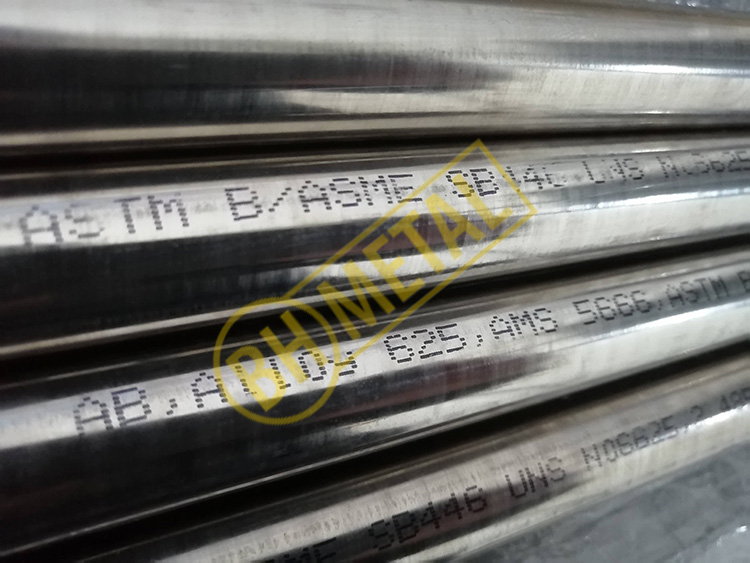
Inconel 625, Alloy 625, UNS N06625, W.Nr. 2.4856, NiCr22Mo9Nb
|
Product |
AMS |
ASTM |
|
Solid Bar |
AMS 5666 |
ASTM B446 |
|
Plate |
AMS 5599 / AMS 5869 |
ASTM B443 |
|
Seamless Pipe / Tube |
AMS 5581 |
ASTM B444 / ASTM B829 |
|
Welded Tube |
AMS 5581 |
ASTM B704 / ASTM B751 |
|
Welded Pipe |
— |
ASTM B705 / ASTM B775 |
Special Metals – INCONEL® Alloy 625
Note: The information contained in this datasheet is for informational purposes only; no liability is accepted.